NEET UG 2026: Complete Preparation Guide for Medical Aspirants
Master the latest NEET 2026 exam pattern and build a winning strategy to secure your seat in India's top medical and dental colleges.
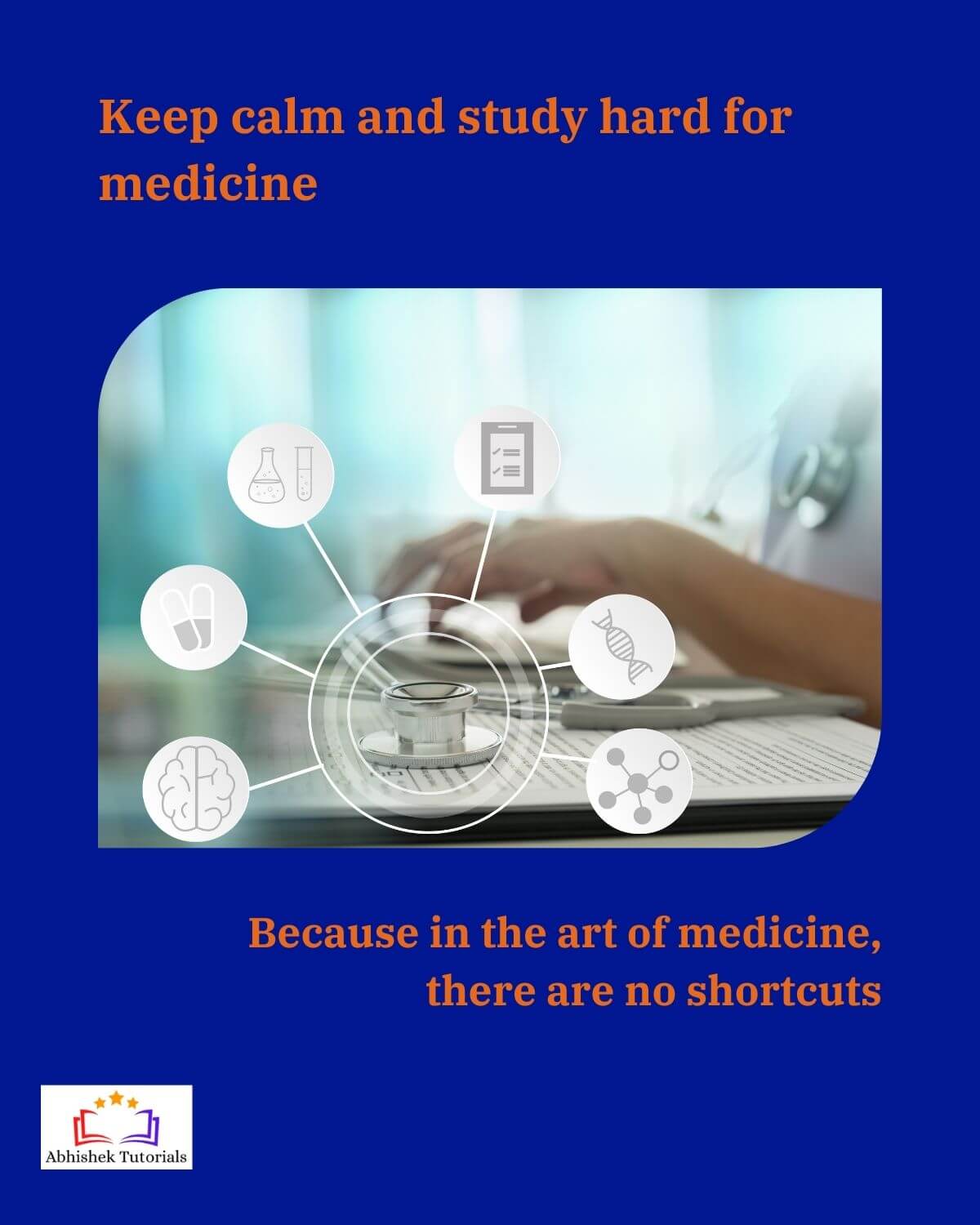
The National Eligibility cum Entrance Test (NEET-UG) is India's single largest and most important medical entrance examination, conducted by the National Testing Agency (NTA) for admission to MBBS, BDS, AYUSH, and veterinary courses across government and private colleges.
NEET 2026 will be held on May 3, 2026, and follows the simplified pattern introduced in 2025 with all 180 questions compulsory, no optional questions, and a total exam duration of 3 hours.
Since 2020, admissions to all prestigious institutions including AIIMS and JIPMER are conducted exclusively through NEET, making it the single gateway for every medical aspirant in India and significantly increasing competition for top ranks.
At Abhishek Tutorials, we recognize that NEET preparation requires not just hard work but smart strategy, covering the vast NCERT syllabus while developing the speed and accuracy needed to excel in this high-pressure examination.
NEET 2026 Exam Pattern
Understanding the exam structure is crucial for effective time management and strategic preparation throughout the year.
Core Exam Details
- Mode: Offline (pen-and-paper based test)
- Exam date: May 3, 2026
- Duration: 3 hours (180 minutes)
- Timing: 2:00 PM to 5:00 PM (Indian Standard Time)
- Total questions: 180 (all compulsory, no optional questions)
- Total marks: 720
- Question type: Multiple Choice Questions (MCQs) with four options each
- Medium: 13 languages available (English, Hindi, Urdu, Bengali, Assamese, Gujarati, Marathi, Odia, Kannada, Tamil, Telugu, Malayalam, Punjabi)
- Registration and updates: Check the official NEET website regularly
Subject-wise Question Distribution
Physics
- Number of questions: 45
- Total marks: 180
- All questions compulsory
Chemistry
- Number of questions: 45
- Total marks: 180
- All questions compulsory
Biology
- Botany: 45 questions (180 marks)
- Zoology: 45 questions (180 marks)
- Biology total: 90 questions (360 marks)
NEET 2026 Marking Scheme
- +4 marks for every correct answer
- -1 mark for every incorrect answer (negative marking applies)
- 0 marks for unattempted questions
- If more than one option is marked for a question, it is treated as incorrect and -1 mark is deducted
- No changes allowed once answers are marked on the OMR sheet
Key Changes from Previous Years
NEET 2025 marked a significant shift back to the pre-pandemic pattern, and these changes continue for NEET 2026, making preparation more straightforward but demanding greater accuracy.
- No optional questions: Previously (2022-2024), the paper had Section A with 35 compulsory questions and Section B with 15 questions where you could attempt any 10. Now all 180 questions are mandatory.
- Reduced duration: The exam time has been reduced from 200 minutes (3 hours 20 minutes) to 180 minutes (3 hours), requiring better time management.
- Single section per subject: The A/B section division has been removed; each subject now has one unified section of 45 questions (90 for Biology).
- Reduced syllabus: NEET 2026 follows the rationalized NCERT curriculum with several topics deleted from Physics, Chemistry, and Biology, reducing the total chapter count to approximately 79 chapters across all three subjects.
Subject-wise Preparation Strategy
Biology: The Scoring Powerhouse (360 marks)
Biology carries exactly 50% of the total NEET marks and is traditionally the highest-scoring section for most successful candidates.
Botany Focus Areas
- Plant Physiology (photosynthesis, respiration, plant growth and development)
- Reproduction in Flowering Plants (pollination, fertilization, seed formation)
- Genetics and Evolution (Mendelian genetics, molecular basis of inheritance)
- Plant Kingdom and Morphology (classification, structural organization)
- Cell Biology (cell structure, cell cycle, cell division)
Zoology Focus Areas
- Human Physiology (digestive, circulatory, respiratory, excretory, nervous, endocrine systems)
- Human Reproduction (male and female reproductive systems, reproductive health)
- Genetics and Evolution (inheritance patterns, molecular biology, evolution)
- Ecology and Environment (ecosystems, biodiversity, environmental issues)
- Animal Kingdom and Structural Organization (classification, anatomy)
Biology Preparation Tips
- Read NCERT line by line, including examples, diagrams, and footnotes—NEET questions are often lifted directly from NCERT text
- Create labeled diagrams for all systems and processes; diagram-based questions are very common
- Make concise notes for quick revision of facts, diseases, scientists, and their contributions
- Practice assertion-reason questions extensively as they test both knowledge and logical connections
- Focus on applied and clinical aspects, especially in Human Physiology and Health & Disease chapters
Chemistry: The Balanced Performer (180 marks)
Chemistry is divided into three distinct sub-sections, each requiring a different preparation approach.
Physical Chemistry
- High-scoring if concepts are clear: Mole Concept, Atomic Structure, Chemical Equilibrium, Thermodynamics, Chemical Kinetics, Electrochemistry, Solutions
- Requires strong numerical problem-solving skills similar to Physics
- Practice numerical questions from each chapter daily to build speed and accuracy
Organic Chemistry
- Foundation topics: General Organic Chemistry (GOC), Isomerism, Nomenclature, Reaction Mechanisms
- Core chapters: Hydrocarbons, Alcohols, Phenols, Ethers, Aldehydes, Ketones, Carboxylic Acids, Amines
- Special topics: Biomolecules, Polymers, Chemistry in Everyday Life
- Master named reactions, mechanisms, and reagents through repeated practice and flashcards
Inorganic Chemistry
- Periodic Table and Periodic Properties
- Chemical Bonding and Molecular Structure
- s-Block, p-Block, d-Block, and f-Block Elements
- Coordination Compounds
- Requires consistent revision and memory techniques for trends, exceptions, colors, and properties
Physics: The Challenge that Differentiates (180 marks)
Physics is often considered the toughest section by medical aspirants but is crucial for securing a top rank and separating you from the competition.
High-Weightage Topics
- Mechanics: Laws of Motion, Work Energy Power, Gravitation, Rotational Motion
- Electrodynamics: Electrostatics, Current Electricity, Magnetism, Electromagnetic Induction, AC Circuits
- Modern Physics: Dual Nature of Matter, Atoms and Nuclei, Semiconductor Electronics
- Optics: Ray Optics and Wave Optics
- Thermodynamics and Kinetic Theory of Gases
- Oscillations and Waves
Physics Preparation Tips
- Build strong conceptual clarity by understanding the 'why' behind every formula and law
- Practice derivations as NEET can ask theory questions from Physics as well
- Solve numerical problems daily to improve calculation speed without calculators
- Focus on formula-based direct questions and standard problem types that appear repeatedly
- Use diagrams and graphs to visualize concepts, especially in mechanics and electromagnetism
Overall Preparation Strategy
1. NCERT is Non-Negotiable
NEET is almost entirely NCERT-based across all three subjects. Every serious NEET aspirant must complete NCERT thoroughly at least 3-4 times before the exam.
- Read every line, diagram caption, example, and exercise in NCERT textbooks for Classes 11 and 12
- Make notes in the margins, highlight important points, and mark frequently asked topics
- For Biology especially, memorize exact NCERT language as questions often use the same phrasing
2. Build Strong Conceptual Foundation First
Do not rush into solving mock tests before completing the syllabus thoroughly with clear understanding of every concept.
- Complete one chapter fully (theory + NCERT exercises + additional practice) before moving to the next
- Watch out for common misconceptions and tricky concepts that need extra attention
- Clarify doubts immediately; don't let confusion accumulate
3. Practice with Purpose
- Solve previous year NEET questions (at least last 10 years) topic-wise first, then full papers
- Attempt NEET mock tests in exam-like conditions once syllabus is complete
- Analyze every mock test thoroughly: identify weak areas, silly mistakes, and time management issues
- Maintain an error log and revise mistakes weekly to avoid repetition
4. Time Management During Exam
With 180 questions in 180 minutes, you have exactly 1 minute per question on average, so strategic planning is essential.
- Recommended time allocation: Biology (60-70 minutes), Chemistry (50-55 minutes), Physics (55-60 minutes)
- Start with your strongest subject to build confidence and momentum
- Attempt sure-shot questions first, mark doubts, and return to them later
- Never spend more than 2 minutes on any single question during the first attempt
- Leave highly confusing questions unattempted rather than risking negative marks
5. Smart Revision Strategy
- Create concise revision notes and formula sheets for all three subjects
- Revise completed topics weekly to ensure retention
- In the final 2-3 months, focus on rapid revision cycles rather than learning new topics
- Maintain separate flashcards for Biology facts, Chemistry reactions, and Physics formulas
Common Mistakes to Avoid
- Ignoring NCERT: Many students jump to reference books too quickly without mastering NCERT first
- Neglecting Biology: Since Biology carries 50% weightage, any weakness here severely limits your score
- Poor time management: Spending too much time on difficult Physics questions and rushing through Biology
- Skipping revision: Covering syllabus once without regular revision leads to massive forgetting
- Over-attempting: Trying to answer every question even when unsure, leading to heavy negative marking
- Ignoring physical and mental health: Burnout and exam stress can ruin months of preparation
AIIMS and JIPMER Integration
A major advantage for current NEET aspirants is that all AIIMS institutions (including AIIMS Delhi, the most sought-after medical college in India) and JIPMER (Puducherry and Karaikal) now admit students exclusively through NEET.
Previously, these institutions conducted separate entrance exams with different patterns. Now, a single NEET preparation strategy opens doors to every top medical college in the country, though competition for AIIMS Delhi typically requires ranks within the top 100-200.
Important Dates and Timeline
- Registration start: February 8, 2026
- Last date to apply: March 8, 2026
- Exam date: May 3, 2026
- Result declaration: Expected in early June 2026
- Counseling: Conducted by MCC (Medical Counseling Committee) for All India Quota and by individual states for state quota seats
- For latest updates, visit the official NTA NEET portal
Our Comprehensive NEET Preparation Approach
- Complete NCERT coverage with line-by-line explanation, ensuring no topic is left untouched
- Separate theory and problem-solving sessions for each subject, building both knowledge and application skills
- Weekly topic tests and monthly full syllabus mock tests designed exactly as per NEET pattern and difficulty level
- Dedicated doubt-clearing sessions where students can ask questions freely and get personalized attention
- Regular performance tracking and analysis to identify weak areas and customize study plans for each student
- Time management workshops and exam temperament training to handle pressure during the actual exam
- Comprehensive study material including NCERT-based notes, previous year questions, and high-quality practice sets
- Motivational guidance and counseling to keep students focused and mentally strong throughout the preparation journey
Resources for NEET Preparation
NCERT Textbooks
Your primary resource for NEET preparation. Complete Classes 11 and 12 NCERT for Physics, Chemistry, and Biology multiple times. Every question in NEET can be traced back to NCERT content.
Previous Year Papers
Solve at least 10 years of NEET previous year questions to understand question patterns, frequently tested topics, and difficulty levels. Available on the official NEET website.
Mock Tests
Regular full-length mock tests in exam-like conditions are essential for building speed, accuracy, and stamina. Aim for at least 20-30 full mocks before the actual exam.
Start your medical journey with us! Our NEET program combines rigorous academics with personalized mentoring to help you achieve your dream of becoming a doctor. With experienced faculty, comprehensive study material, and a proven track record of success, we provide everything you need to crack NEET 2026. Contact us for a free demo class and assessment of your preparation level.
Discussion
Leave a Comment
12th ke Pariksha arts Hindi English home science music geography
Sir explanation is very clear and concepts too